
Did you know that Wales is home to the fastest zip-line in the world, 250 dolphins, and the grave of Dobby the House Elf? If the answer to any of these is no, then you're in the right place.
In this article, I'll share 28 facts about Wales, or Cymru as we call it. Once you've read through these facts, have a go at my Welsh quiz to test your newfound knowledge.
1. Wales IS a country
Many people debate whether or not Wales is a country. The fact is there are two types of countries; constituent countries and sovereign countries.
Wales is a constituent country because it has its own government and national identity. However, it's not a sovereign country because it does not have full control over its law-making, this falls to the UK government in Westminster.
The same can be said for the other parts of the UK; Scotland, England, and Northern Ireland, which are all constituent countries.
2. Wales has more castles per square mile than anywhere else in Europe

Wales is often called the castle capital of Europe with more castles per square mile than any other European country1.
Among the 427 castles that are packed into a reasonably small area, you'll find everything from ruins and structures that were never finished, right up to well-preserved castles.
3. The name 'Wales' basically means 'foreigner'
The English name ‘Wales’ comes from the Anglo-Saxon word ‘Wealhas’ which roughly translates as ‘foreigner’.
For most of its life, Wales was not a unified country with one name. However, the Anglo-Saxons would refer to anyone who didn't speak English as ‘Wealha’, meaning ‘foreigner’. The name eventually stuck.
The Welsh name for Wales is Cymru, this comes from the earlier Brythonic Celtic word ‘combrogos’ meaning ‘compatriot’.
4. The population of Wales is 3 million
According to the latest census data (2021), the population of Wales is 3,107,494. This represents around 5% of the UK population, making it the third biggest country in the UK by population, behind England and Scotland2.
The largest regions of Wales by population are Cardiff, Swansea, and Rhondda Cynon Taff.
5. It's one of three countries in the world to have a dragon on its flag
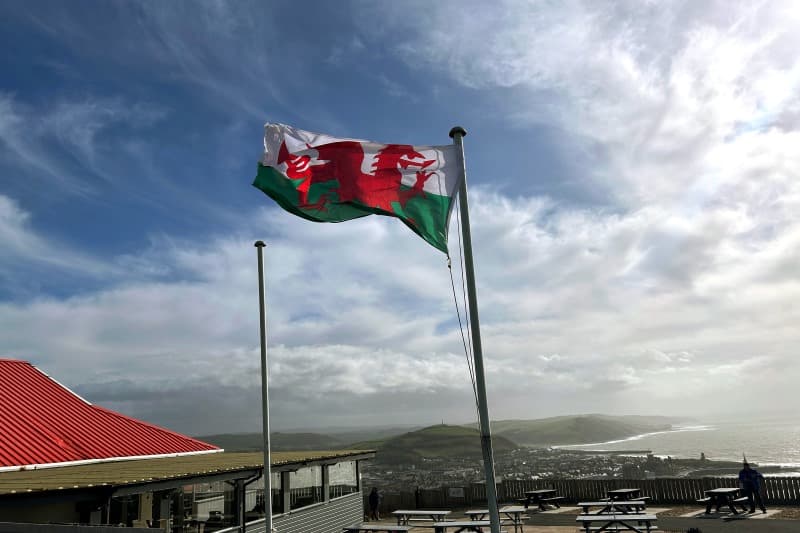
The flag of Wales is immediately recognisable with the red dragon against a white and green background which makes it very different from most flags in the world.
The origin of the red dragon dates back to a mythical story from the 5th century when a red dragon, representing the Celtic people, fought and won against a white dragon, representing the Saxons3.
Since then it has become a popular emblem for the country, being used by Cadwaladr, Owain Glyndwr, and the Tudors to name a few. It was officially recognized by the British government in 1959.
Also Read: Why is There a Dragon on the Welsh Flag?
The only other countries to feature a dragon on their flag are Bhutan and Malta.
Of the four nations in the United Kingdom, only Wales is not represented on the Union Jack. This is because Wales and England were already united when the UK was formed.
6. A village in Angelsey has the second-longest name in the world
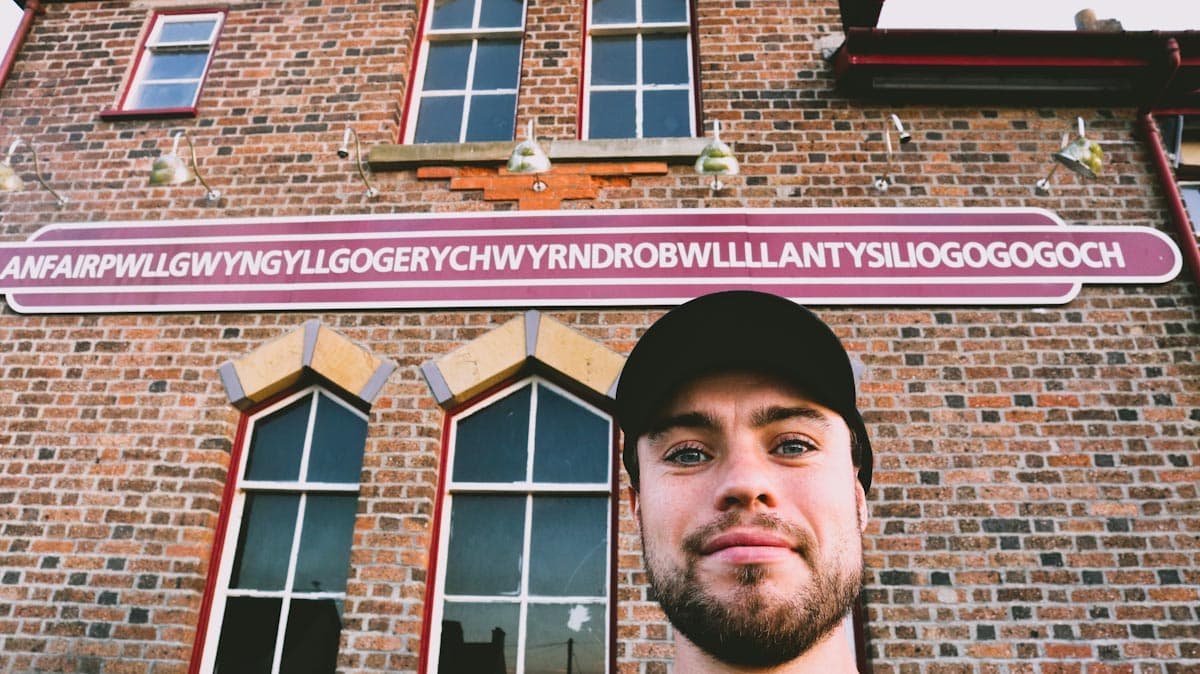
A small village of just 3,000 or so people in North Wales is known across the world, although few people outside of Wales can correctly pronounce it.
Llanfairpwllgwyngyllgogerychwyrndrobwllllantysiliogogogoch is the second-longest place name in the world with 58 characters. However, most people simply refer to it as Llanfair P.G.
The translation of this into English is roughly 'St. Mary's Church in the hollow of the white hazel near a rapid whirlpool and the Church of St. Tysilio near the red cave'4. This is just one of several places in Wales with long names.
The longest place name in the world is Taumatawhakatangihangakoauauotamateaturipukakapiki-maungahoronukupokaiwhenuakitnatahu on the North Island in New Zealand with 85 characters
7. There are a lot of people called Jones
The most common surname in Wales is Jones with 5.6% of the population having the surname. This might not sound like a lot, but only 1.1% of people in England have the most common surname which is Smith5.
If you're wondering why there are so many Jones's in Wales, there's a good reason behind it.
Prior to 1542, Wales had a patronymic naming system where children took their father’s first name as their surname. So if my dad was called John, I would have been called 'Kieren ap John'.
When Henry VIII united England and Wales, he declared that the Welsh must have traditional surnames like the English. So people whose father was called John (a common name at the time) changed it from 'ap John' to Jones.
8. Dobby the House Elf died in Wales
Wales has earned itself a reputation for creating great TV shows with the likes of Dr Who, His Dark Materials, Sherlock, and Sex Education all being filmed on Welsh soil.
However, it's also landed some noteworthy spots on the big screen too. A waterfall in the Brecon Beacons was used as the entrance to the Batcave in The Dark Knight Rises.
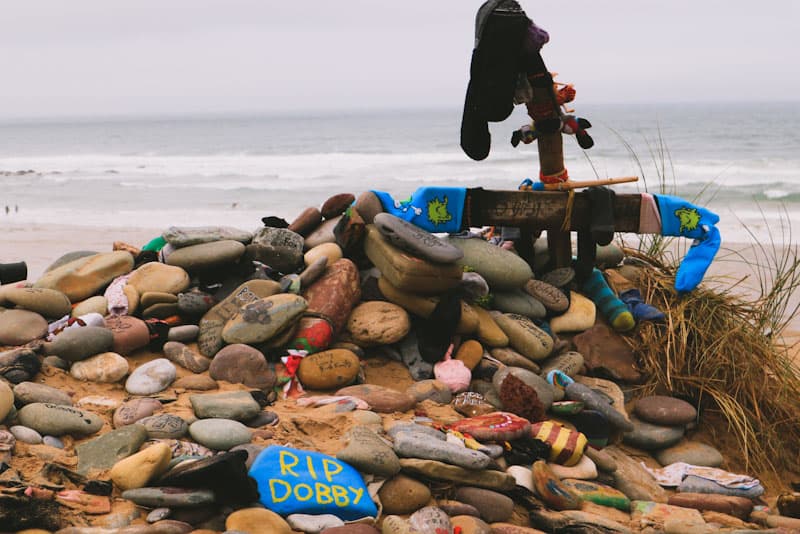
Meanwhile, Freshwater West beach in South Wales was used as the filming location for some Harry Potter scenes including Dobby's death.
You can visit Dobby's grave today and pay tribute to your favourite house elf.
9. Wales is just over 20,000 square km
Wales is 20,779 km square (12,911 square miles) making it around the same size as Slovenia or the state of New Jersey. It makes up around 8.5% of the landmass of the United Kingdom.
Wales is the 39th largest country in Europe (out of 54 if we count each part of the UK separately).6
10. Leeks and daffodils are among some of the emblems of Wales

Wales has many emblems including the red dragon on its flag, the leek, and the daffodil. One of the oldest Welsh emblems is the leek which became symbolic after the Battle of Crécy in Northern France in 1346.
During this battle, Welsh archers defeated French foot soldiers helping the English secure victory. The battle was said to take place in a field of leeks which is why people back in Wales began wearing the green and white vegetable in the caps to honour the bravery of those that fought.
A more recent emblem is the daffodil which is Wales's national flower. How the daffodil became a symbol of Wales is not fully clear, but it's blooming date just in time for St David's Day (1st March) is likely a key reason.
Other emblems of Wales include the harp, red kites, and the Welsh national dress.
11. Wales has 7 cities, including the smallest city in the UK

There are now 7 cities in Wales since Wrexham became a city in 2022.
The cities, in order of size, are Cardiff (the capital city of Wales), Swansea, Newport, Wrexham, Bangor, St Asaph, and St David's.
The final one on the list, St David's, is the UK's smallest city, about the size of a village with a population of just 1,600. The city has a cathedral and was made a city in 1992 as part of the 40th anniversary of the Queen's coronation
Although small, the city is a key part of Christian heritage as it's built on the site where St David (the patron saint of Wales) founded a monastery in the 6th Century.
12. Wales has three national parks, soon to be four

There are three national parks in Wales, these are (in order of size): Eryri (previously known as Snowdonia), Bannau Brycheiniog (previously known as the Brecon Beacons), and Pembrokeshire Coast National Park.
Eryri (Snowdonia) is over 800 square miles and is home to Wales's highest mountain, Yr Wyddfa (or Snowdon in English) which stands at 1,085 metres (3,560 ft) making it the third tallest mountain in Britain.
There are plans to create a fourth national park at The Clwydian Range7.
There are also five Areas of Outstanding Natural Beauty in Wales which are areas that are protected due to their 'significant landscape value'. They are Anglesey, Clwydian Range and Dee Valley, Gower, Llŷn, and Wye Valley.
13. Mount Everest is named after a Welshman
In 1852 the Great Trigonometrical Survey identified the highest mountain in the world on the border between Nepal and Tibet. It was initially known as Peak XV.
The survey team had been barred from entering Nepal so they were unaware that the mountain had the local name Chomolungma (“Goddess Mother of the World”).
With no alternative names to fall back on, Andrew Waugh proposed that it be named after his predecessor, Sir George Everest, a Welshman who had spent more than 25 years working on the Great Trigonometrical Survey.
Everest rejected the idea but Waugh insisted and the name stuck.
14. Famous things invented in Wales include the equals sign (=) and Viagra

Wales has had a significant impact on the world by gifting it some things we now take for granted. A few famous Welsh inventions include:
- Viagra - Researchers for a new heart drug at a clinical research centre in Merthyr Tydfil found that all of the male volunteers involved in the trial had experienced some "unusual side effects". Viagra was invented.
ㅤ - The Equals Sign - Robert Recorde from Tenby in South Wales invented the equals sign. He said “to avoid the tedious repetition of these words – is equal to – I will set a pair of parallels lines of one length, because no two things can be more equal”
ㅤ - Mail Order - Long before Amazon, Sir Pryce-Jones from Newtown was the pioneer of mail order. Using train delivery to expand his customer base beyond Newtown.
Also Read: 21 Famous Welsh Inventions
15. There's a path for walking around the entire coastline of Wales

The Wales Coastal Path is a long-distance footpath that stretches for 870 miles (1,400 km) around the entire coastline of Wales.
It was opened in 2012 and is one of 16 National Trails in England and Wales
The path passes through 12 counties and would take up to 7 weeks to walk at a brisk pace or up to 3 months for an average walker
16. There are enough sheep in Wales for 3 per person
There are more than 10 million sheep in Wales
Many English people use this fact as the basis for name-calling against the Welsh (we all know what!) making it one of the reasons why the Welsh don't like the English.
17. There's an Italian village in North Wales

Nestled away in Gwynedd, North Wales, there's a surprising Italian-styled village called Portmeirion that was created by the architect Sir Clough Williams-Ellis in the late 19th Century.
The village was inspired by the fishing village of Portofino in Italy of which the architect was a big fan.
Nowadays, the village is a big tourist attraction with hotels, cottages, and a plethora of restaurants, all set against the backdrop of rolling Welsh hills. There's even a music festival that takes place there each year.
18. St David's Day is Wales's national day

St David
The 1st of March marks St David's Day, the national day of Wales. It's not a public holiday but a day to celebrate all things Welsh.
The day is usually celebrated with the wearing of daffodils, parades in the street, and eating traditional Welsh dishes such as cawl (a Welsh stew), bara birth (a fruit cake), and Welsh cakes. In schools across the country, pupils often take part in competitions and might wear the Welsh national dress.
St David is the patron saint of Wales, he was a devout monk and one of the earliest vegetarians. It is said that he performed miracles such as raising the ground underneath him, bringing a youth back from the dead, and surviving after being poisoned
19. St Patrick was most likely Welsh
The Irish patron saint is a little more famous than the Welsh one. He is celebrated on St Patrick’s Day which has become a global event. There are huge parades, people dressed as leprechauns, and everyone drinks Guinness in honour of the patron saint.
But a little known fact is that he wasn’t even Irish. He was most likely Welsh with the birth name Maewyn Succat.
He was kidnapped by raiders and taken to Ireland as a slave. After escaping, he became a priest and returned to Ireland to spread the word about Christianity.
20. In Wales, you can kayak across the highest aqueduct in the world

The Llangollen canal connects parts of North Wales with Shropshire and Cheshire in England.
The canal features 21 locks to help boats navigate across the terrain and one of the most impressive features is Pontcysyllte Aqueduct which carries the canal across the River Dee.
The aqueduct is 307m long and stands at 38m high, making it the highest aqueduct in the world. As well as viewing it from below, one of the best things to do in Wales is taking a boat across the top.
21. Wales has its own language with a 29-letter alphabet
The native language of Wales is Welsh which is a Celtic language. Just under 30% of people in Wales can speak Welsh as a first or second language.
The Welsh alphabet has 29 letters. There is no k, q, v, or z in Welsh, instead, there are 8 digraphs (a pair of characters that count as one).
So, the full Welsh alphabet goes like this:
a, b, c, ch, d, dd, e, f, ff, g, ng, h, i, j, l, ll, m, n, o, p, ph, r, rh, s, t, th, u, w, y
22. Rugby is the national sport of Wales
Rugby Union is the unofficial national sport of Wales and has been played there for centuries. It is played by all ages from school children to adults.
The Welsh rugby team is one of the most successful in the world and regularly competes in the Rugby World Cup.
Closer to home, they have won the Six Nations Championship a record 39 times (as of 2022), placing them joint first with England.
23. Around 60 currencies are produced in Wales

Wales does not have its own currency, it uses the Great British Pound (GBP) just like the rest of the UK. But what you may not know is that all of the coins used in the UK are produced at the Royal Mint in Llantrisant, South Wales.
It's not just the domestic currency that's made here, it's the world's leading export mint making currencies for more than 60 countries around the world including Jamaica, Tanzania and Thailand8.
If you fancy a money-making day out (quite literally), you can visit the Royal Mint Experience to find out more about the history of the mint and how it produces more than 5 billion coins each year.
24. Wales receives over 33 million visitors per year
Wales is a hotspot for tourists. According to the latest Wales Tourism Statistics, Wales receives more than 33 million visitors each year. That's more than 10X the population.
This is why the tourist economy is worth £6 billion to Wales.
The majority of visitors come from England on day trips to Wales.
25. An area of Wales is known as 'Waterfall Country'

Henrhyd Falls (in summer)
An area of the Bannau Brycheiniong (Brecon Beacons) National Park is known as 'Waterfall Country' due to having a large number of waterfalls in one area.
The area is home to at least 13 notable waterfalls where several rivers runs through gorges at the southern end of the national park.
One of the most famous waterfalls is Henrhyd Falls (shown above) which was the filming location for the entrance to the Bat Cave in the Hollywood blockbuster The Dark Knight Rises.
26. Wales has the fastest zipline in the world
The Velocity 2 zipline in Wales is located at the Penrhyn Quarry near Bethesda. It stretches for 1.5km through Snowdonia and reaches speeds up to 100mph, making it the fastest zipline in the world.
The quarry was used for slate mining from the late 18th century until the early 21st century, and it is now a popular tourist destination. Zip World offers several other zip lines and adventure activities, making it a great place for thrill-seekers to visit.
27. Around 250 dolphins live off the coast of Wales

Britain's largest population of dolphins live in Cardigan Bay, just off the coast of Wales.
There are around 250 bottlenose dolphins that can be seen year-round, and if you're lucky you may even come across harbour porpoises, orca, or the occasional humpback whale9.
There are two main places you can take a dolphin spotting trip. The above photo was taken on a tour with A Bay To Remember from Cardigan, you can also go with New Quay Boat Trips from New Quay.
28. Some famous Welsh people include Shirley Bassey, Gareth Bale, and Roald Dahl
My final fact about Wales is about some of the most famous Welsh people.
Some of the more obvious ones are Shirley Bassey, Tom Jones, Michael Sheen, Gareth Bale, and Anthony Hopkins.
But there are also a few unexpected Welsh celebrities to add to the list, including Dawn French, Roald Dahl, and Christian Bale.
Many people are confused to learn that Roald Dahl, the world's best-known children's author, is Welsh. Both of his parents were Norweigan but they lived in Cardiff where his father was involved in the shipping industry at Cardiff Docks (now Cardiff Bay). Dahl was born in Llandaff, Cardiff and spent his childhood in Wales.
Published: 2 May 2022 · Last updated: 17 January 2024