
The Green Bridge of Wales is one of the most recognisable natural landmarks in Wales, found along the Wales Coastal Path in Pemberokeshire, West Wales.
I recently visited for myself, and in this guide, I’ll explain everything you need to know for planning your own visit, as well as a little background about the arch itself.
What is the Green Bridge of Wales?
The Green Bridge of Wales is a limestone arch on the Pembrokeshire coastline. Like other limestone arches in the UK (notably Durdle Door), the arch would have originally been a solid piece of headland.
Over millions of years, the wind and sea would have slowly chipped away at the cliffside as small pebbles are thrust against it. Sand particles and chemical erosion would also have an impact, as would the strong waves coming from the southwest
Initially, it would have caused two caves on opposing sides of the cliff. The caves would get deeper until they eventually meet and the archway is created.

Is It Worth Visiting?
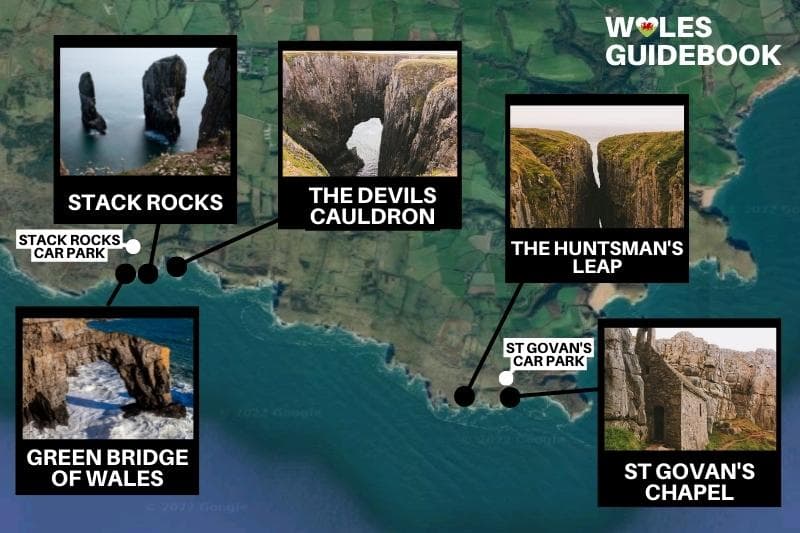
Absolutely, visiting the Green Bridge of Wales is among my favourite things to do in Pembrokeshire. It's very easy to visit and offers stunning views across the Welsh coast. Right next to the Green Bridge of Wales, you'll find Stack Rocks and the Witches Cauldron, so you get three natural landmarks for your money.
It's also very easy to combine with St Govan's Chapel and the Huntsmans Leap, two more iconic landmarks just a little further along the coast. You can walk to these in about an hour or drive as there is another car park right next to the chapel.
Jump to this section for more information on each of these other landmarks.
How To Visit the Green Bridge of Wales
Getting to the Green Bridge of Wales from the car park is easy. There is a short 200m path that takes around 3 minutes to walk. The path is pram and wheelchair-friendly.


When you arrive, there is a viewing platform which is also very accessible.
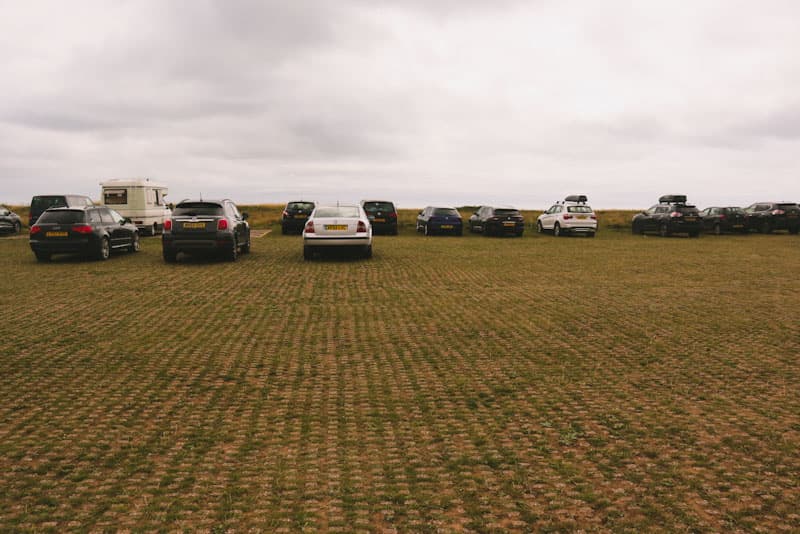
- Visiting by Car: If visiting the Green Bridge by car, park at the Stack Rocks car park. This is free and open 24 hours per day.
- Visiting by Public Transport: To reach the Green Bridge by public transport, take the Pembrokeshire Coastal Cruiser which runs from Pembroke Docks twice per day. The stop is called Stack Rocks Car Park.
Opening Times
The Green Bridge of Wales is open 24 hours a day, 7 days per week, except in the case of military training at Castlemartin Firing Range. You can check for potential closures here.
How Much Does it Cost to Visit?
There is no cost to visit the Green Bridge of Wales and parking is free too.
Facilities
The only facilities at the Green Bridge are a few picnic benches dotted near the car park. During peak periods, there may also be a food van serving drinks and snacks. There are no toilets.

Facts About the Green Bridge of Wales
- The Green Bridge of Wales is approximately 24 m (80 ft) high and more than 20 m (66 ft) wide.
ㅤ - The Natural Arch and Bridge Society describe the bridge as ‘probably the most spectacular arch in the United Kingdom’.
ㅤ - The area is popular with birdwatchers due to its popularity with colonies of kittiwakes, guillemots, razorbills, fulmars, and shags
(source: A.S. Goudie and R. Gardner, Discovering Landscape in England & Wales, 2013) . It has the largest concentration of breeding seabirds on the Pembrokeshire mainland(source: Natural Resources Wales) .
ㅤ - The bridge is part of the Castlemartin Range Site of Special Scientific Interest (SSSI), as well as the Limestone Coast of South West Wales Special Area of Conservation (SAC) due to it’s rich geological and fossil heritage, vegetation, and special species (such as the Greater horseshoe bat)
ㅤ - It's called the 'Green Bridge of Wales' due to the green vegetation that grows on top.

Damage to the Green Bridge
Limestone arches such as this are constantly eroded little by little as the wind and sea cause sand and small pebbles to be thrust against the cliffside.
Occasionally, severe storms will cause large amounts of damage in one swoop, this happened at the Green Bridge in 2017 when Storm Ophelia hit the Pembrokeshire coastline on the 16th of October.
You can see a before and after comparison of the damage over at the Western Telegraph.
One day, the arch will collapse, leaving the structure looking more like nearby Stack Rocks, although there is no estimated timeline for this.

Can You Walk on the Green Bridge of Wales?
Although it would be possible to walk across the green bridge, Natural Resources Wales (who manage the area) forbid access due to nesting seabirds.

Having said that, it's clear that people ignore this advice as there is an obvious trail across the bridge where people have been walking.
I would not recommend attempting this as the arch could be slippery and the edges are very sharp and steep.
Other Nearby Attractions
The Green Bridge isn’t the only landmark worth checking out in this area:
- Stack Rocks - Just a few minutes walking from the Green Bridge is Stack Rocks, two limestone pillars that would have looked like the Green Bridge until their arches collapsed.
ㅤ - The Devil's Cauldron - This is a deep enclosed shaft in the Earth that would have been formed when caves below it collapsed due to coastal erosion.
ㅤ - St Govan’s Chapel - A stone chapel that was built in the cliffside by St Govan after he escaped pirates here (read the full story here).
ㅤ - The Huntsman’s Leap - This is a deep fissure in the Earth, again caused by coastal erosion. It's located near the chapel so I recommend visiting both together.
Published: 23 September 2022 · Last updated: 30 August 2023