
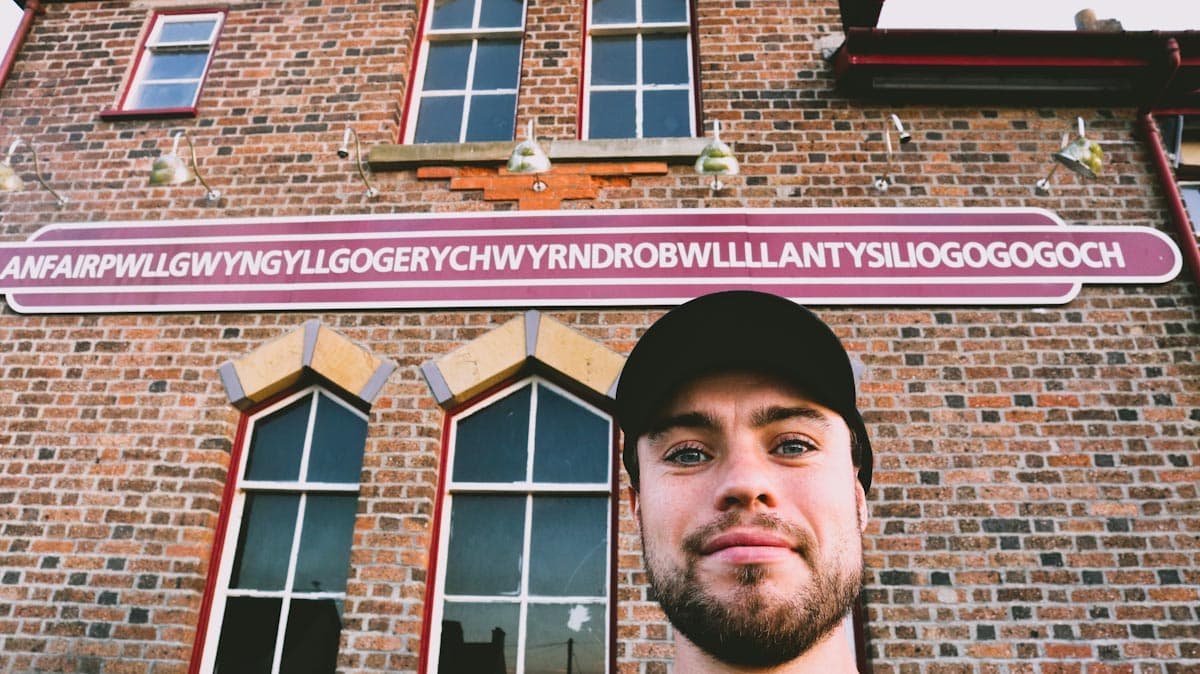
Whether you're planning a trip to Wales or simply want to learn some basic phrases for everyday use, this go-to list of Welsh phrases is the perfect starting point. Even though English is the main language in Wales, it's still nice to learn some of the local language too.
Having grown up in North Wales, the majority of these sayings and phrases will use the North Wales way of speaking which can be slightly different. However, where it's likely to cause confusion, I will include the South Wales version too.
1. "Bore da / P'nawn da" - Good morning / Good afternoon
These classic greetings are easy phrases to start with. To pronounce, say "bor-eh daah" or "pu-now-n daah". The word "da" simply means "good" and can be used in other contexts too such as "da iawn" meaning "very good".
You can also just say "helo" (the "o" sounds more like "or" in British English, rather than "oh") which, as you may guess, means "hello".
2. "Diolch yn fawr" - Thank you very much
"Diolch" is the Welsh way of saying "thank you" and is pronounced as "dee-olch", with the "ch" being the guttural sound in the word "loch".
It is a versatile phrase that can be used in both formal and casual situations, although adding "yn fawr" (pronounced "uhn-va-oor") turns it into "thank you very much".
3. "Fy enw i yw ___" - My name is ___
When introducing yourself, "fy enw i yw" is used. It is pronounced like "vuh en-oo-ee iw" and is followed by your name. For example, "fy enw i yw Lisa" means "my name is Lisa".
You can also just say "____ dw i", which means "I am ____".
4. "Os gwelwch yn dda" - Please
When asking for something politely, you can say "os gwelwch yn dda". Literally, it means "if you see kindly". The way to pronounce this is "os goo-el-ooch uhn thaah".
However, if you are in a more informal setting, the word "plîs" is more likely to be used.
5. "Sut wyt ti?" - How are you?
This is a casual way of greeting somebody, pronounced "sit-oo-it-ee".
If you're using formal Welsh, you would instead ask "Sut 'dach chi?" (pronounced "sit dach-ee").
However, in South Wales, "shwmai?" (pronounced "shoo-mai") is more likely to be used.
6. "Faint ydy hyn?" - How much is this?
To inquire about the price of something, use "faint yw hyn?" (pronounced "va-int iw hin") or "faint ydy hyn?" (pronounced "va-int uh-dee hin").
Alternatively, you could use "Faint mae ____ yn gostio?" (pronounced "va-int mai ___ uhn gos-tee-o") which literally means "how much does ___ cost?".
For example, "Faint mae cwrw yn gostio?" would mean "how much does beer cost?"
7. "Faint o'r gloch ydy hi?" - What time is it?
"O'r gloch" means "o'clock". So the full question is asked as "va-int ohr glo-ch uh-dee he".
The word "faint" (pronounced to rhyme with "pint") actually means "how many", so the literal translation is "how many o'clock is it?". This sounds odd in English but works perfectly fine in Welsh.
Another way to ask this is "Be 'di'r amser?" (pronounced "bear deer am-ser"), meaning "what's the time?".
8. "Ble mae ___?" - Where is ___?
If you're trying to find anything in Wales this phrase will serve you well. It can be used for both directions to a place and when you are looking for an item.
In English - the "e" of "Ble" is an elongated sound like in "air". So "Ble mae" is pronounced, "blair my". You could ask "Ble mae'r toiled?" (where's the toilet?) or "Ble mae Aberystwyth?".
In North Wales, the word "lle" is sometimes used instead of "ble".
9. "Dwi'n hoffi ___" - I like ___
A very useful phrase to start off your Welsh learning. "Dwi'n hoffi coffi" (pronounced "do-een hoff-ee coffee") is a classic Welsh phrase (meaning "I like coffee"), and of course, you can use it with whatever word you want.
For example "Dwi'n hoffi canu" (I like singing) or "Dwi'n hoffi dysgu Cymraeg" (I like learning Welsh).
10. "Mae'n ddrwg gen i" - I'm sorry
Literally meaning "it is bad by me", this is a rather formal way to say sorry. It is pronounced "main throog gen i".
Note that double D "dd" is just one letter in the Welsh alphabet and has the same sound as the TH in "the" in English.
You could also just say "sori".
11. "Dw i ddim yn siarad Cymraeg" - I don't speak Welsh
If you don't speak Welsh, you can tell people "dw i ddim yn siarad Cymraeg". Try to pronounce it like this: "dwee thim-un shar-ad kum-rye-eg".
"Dw i ddim yn ____" means "I don't ____" so can also be used with a variety of negative sentences. For example, "Dw i ddim yn hoffi coffi" means "I don't like coffee".
12. "Allwch chi helpu fi?" - Can you help me?
In case you find yourself needing assistance, "allwch chi helpu fi?" is the way to ask for help politely in Welsh (all-ooch-ee help-ih vee)?
Note the double "ll", which is a tricky sound to learn in Welsh.
13. "Ga i ___" - Can I ____
This is very useful to use when ordering something, and pronounced simply as "ga-ee".
Combining it with 'please' which we learnt earlier, you could say "Ga i'r cyw iar, os gwelwch yn dda?" which means "Can I have the chicken, please?".
Alternatively, you could say "Ga i fynd i'r toiled?" meaning "Can I go to the toilet?".
14. "Oes ganddoch chi ___" - Do you have ___?
Whether you want to ask someone about their family members or find out what a restaurant serves, this is a handy sentence to know.
This is the North Wales version. An example sentence might be "Oes ganddoch chi rhwybeth i fwyta?" (pronounced "o-is gan-thoch-ee riw-beth i voo-i-ta?") meaning "Do you have anything to eat?".
The South Wales version is "Oes ___ da chi?".
An example using the South Wales version might be "Oes cwrw 'da chi?" (pronounced "o-is kooroo dah chee") meaning "Do you have beer?".
15. "Dw i ddim yn gwybod" - I don't know
If you find yourself lost and confused, you can say "Dw i ddim yn gwybod" (pronounced "doo-ee thim uhn goo-bod") to express your confusion.
Some shorter versions of this include "wn i ddim" (pronounced "oohn ee thim") or "dwnim" (pronounced "dooh-nim").
16. "Dwi isio ___" - I want
Often shortened to the sound of "dwee-sho", this phrase allows you to express what you want easily.
You can use it when ordering from a menu without sounding too rude.
If you are looking to be more formal, however, you could try to use "Swn i'n hoffi ____" (pronounced "soon-een hoff-ee") which means "I would like ___".
17. "Unwaith eto" - Once more
If you're struggling to understand what someone's saying, you can ask them to repeat it using this phrase which is pronounced "in-withe ett-oh".
Combine it with "os gwelwch yn dda" (meaning "please") which we learnt earlier, so the full sentence would be "Unwaith eto, os gwelwch yn dda?".
A slightly more natural way to say this might be "Wnewch chi ddweud hynna eto?" (pronounced "ne-ooch chee the-id hin-ah ett-oh"), which means "will you say that again?".
18. "Dw i ar goll" - I'm lost
Whether literally or metaphorically, saying "dw i ar goll" (pronounced "dwee ar goll") expresses that you don't know where you are.
If you say this along with the phrase we learnt earlier "ble mae ___" (meaning "where is ___?"), you could use it to find your way around, or perhaps to ask someone to try explaining themselves more clearly.
19. "Beth mae ____ yn ei feddwl? - What does ____ mean?
A great phrase for trying to understand Welsh. It's pronounced "beth mai ___ uhn-ay-veth-ool".
For example, if you find a word you don't know such as 'pysgod', you might ask "Beth mae pysgod yn ei feddwl?"
Another option is "Beth ydy ____ yn Saesneg?" (pronounced "beth uh-dee ____ uhn sayss-neg"), meaning "What is ____ in English?"
20. "Sut dych chi'd dweud ___ yn Gymraeg?" - How do you say ___ in Welsh?
Another very useful phrase for learners of Welsh. If you don't know the Welsh word, throw this one in and it's sure to impress.
Pronounced "sit dich-een doo-eid ___ uhn gum-raig".
21. "Alla i ddim bwyta _____" - I can't eat ____
If you're in a restaurant and want to make sure you don't end up with some food on your plate that you can't, or don't want to, eat then it's important that you learn a few basic food words as well as this phrase.
Pronunciation is "all-ah ee thim boo-i-tah" (remembering the "ll" sound in Welsh). Some foods you may want to avoid:
- Cnau ("kuh-nai") = nuts
- Cig ("keeg") = meat
- Caws ("ka-oos") = cheese
- Wyau ("oo-ai") = eggs
- Bwyd môr ("boo-id more") = seafood
- Glwten = gluten
22. "Oes yna ____ yma?" - Is there a _____ here?
If you're exploring a new place, you might want to ask whether there is a swimming pool, castle, etc in the vicinity.
It's pronounced "oo-is uh-na ___ um-a".
The response "oes" means yes in this case, and "nac oes" means no.
23. "Dw i wedi blino" - I am tired
This is a popular phrase with beginners - no wonder when modern life is so exhausting! It's pronounced "Do-ee wed-ee blee-noh".
The "wedi" is used to say that something has happened, so literally this means "I have tired".
A useful tip is that "Dw i wedi _____" can be used to say that you have done something, e.g. "dw i wedi bwyta" means "I have eaten".
24. "Dwi'n siarad dipyn bach o Gymraeg" - I speak a little bit of Welsh.
In this phrase, "Cymraeg" means "Welsh", but it mutates to Gymraeg due to a process called "treiglo" - don't worry about this unless you're studying the language more deeply.
The phrase is pronounced "Do-een sha-rad dip-in bach oh gum-ra-ig".
This can be shortened to just "Dipyn bach" meaning "a little bit" which can be used as a response when somebody asks you if you speak Welsh - or, for example, how much sugar you'd like in your tea!
25. "Wyt ti isio panad?" - Do you want a cup of tea?
The word "panad" (or sometimes spelled paned) is very important in Welsh - it means a cup of tea, or perhaps of coffee.
Just like our fellow British people, no visit to a Welsh person's house would be complete without a warm drink and a chat. It's prononuved as "oo-it-ee isho panad?"
In South Wales, you might prefer to use "Wyt ti moyn dishgled?" (pronounced "oo-it-ee moin dish-gled")
26. "Beth ydy hwn?" - What's this?
More informally this might just be "be 'di hwn?" (pronounced formally as "beth uh-dee hun" or informally as "bear dee hun").
It gets a little more complicated because the word "hon" should be used instead of "hwn" if the object is feminine, but this will work well enough to begin with!
27. "Un, dau, tri, pedwar, pump..." -One, two, three, four, five...
You'l want to perfect your counting in Welsh, starting with 1 to 10. Here are the translations but see our full guide to counting in Welsh for phonetic translations and numbers up to 1 million.
| 1 | Un |
| 2 | Dau |
| 3 | Tri |
| 4 | Pedwar |
| 5 | Pump |
| 6 | Chwech |
| 7 | Saith |
| 8 | Wyth |
| 9 | Naw |
| 10 | Deg |
Use these in any situation such as ordering something. However, technically two feminine items is "dwy" (doo-ih) and three is "tair" (tire) but don't worry too much about that for now.
28. "Hwyl" - Goodbye
Use "hwyl" or sometimes "hwyl fawr" (pronounced "who-ill va-oor") to say goodbye to somebody.
"Hwyl" literally means sail, and is also used as the word for "fun"! Colloquially, "ta" or "ta-ta" is also used to say "bye-bye".
29. "Dw i'n mynd i ___" - I'm going to ___
This is a useful phrase to use both to say where you are going, or to state an intention.
For example, if you say "dw i'n mynd i chwarae'r piano" it means "I'm going to play the piano".
Pronunciation is "do-een mind-ee ____" and then the place or action of your choice.
30. "Paid â poeni!" - Don't worry!
A useful phrase for various situations! Say it phonetically as "pide ah poi-nee".
In South Wales you may prefer to say "Paid a becso" (pronounced "pide ah bek-soh").
If you're speaking to multiple people or formally, replace the first word with "peidiwch" to become "Peidiwchâ poeni!" (pronounced "pay-dee-ooch ah poi-nee").
Hopefully, these phrases will give you a good head-start on speaking Welsh for beginners - however, remember that almost everybody does speak English, too, so if you get stuck there's no need to worry. Enjoy!
Published: 24 January 2023 · Last updated: 23 August 2023